Boat Food: Cast Iron Skillet Pizza

Its Friday. We’re on the mooring in Buzzards Bay and its cold and windy. So why not bake a pizza?

Andante’s original-equipment propane-fired oven is low-tech (no thermostat) and poorly insulated. But it gets the job done under some crazy conditions and still cooks better than our fancy oven in the dirt house. Go figure.
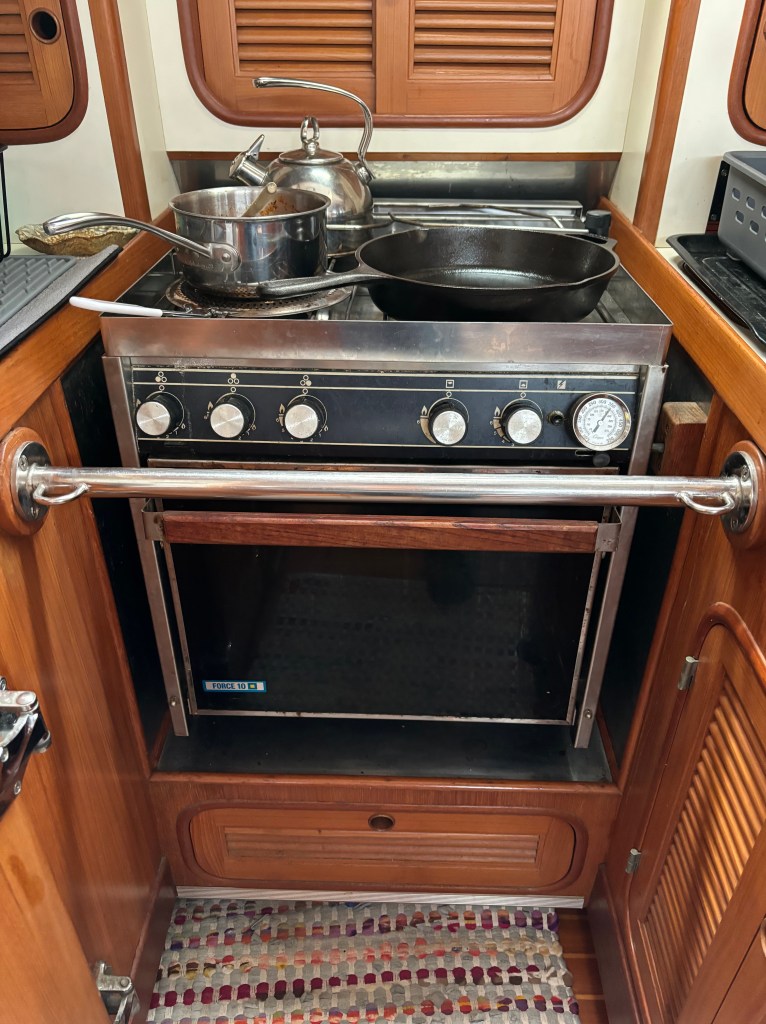
1988 Force 10 3-burner propane stove.

Step 1: Make the dough. I did this earlier this afternoon using a recipe that has worked for me for many years. It is arguably better if you swap half the regular flour for 00 pizza flour. But I don’t have that. And it will still be great.

I do have: 3 cups flour, 2 teaspoons salt, 1 teaspoon sugar. 1 packet (2.25 teaspoons) yeast. 1 cup water. 1 bottle red wine. Mix it all together (except the wine) as best you can in a large bowl. When dough-like, knead until smooth, keeping it in the bowl if possible to avoid a mess. Form into a happy ball, coat in olive oil, and place back in the bowl under a towel to rise for an hour or two (or three, if its cold like it is here today.) Then divide into two balls and (if you are me) freeze one for later.

Dough!

Step 2: Make some sauce. I made a simple marinara with garlic sauteed in olive oil, basil, oregano, red pepper, and a small can of diced tomatoes and cooked it down for about 30 minutes.
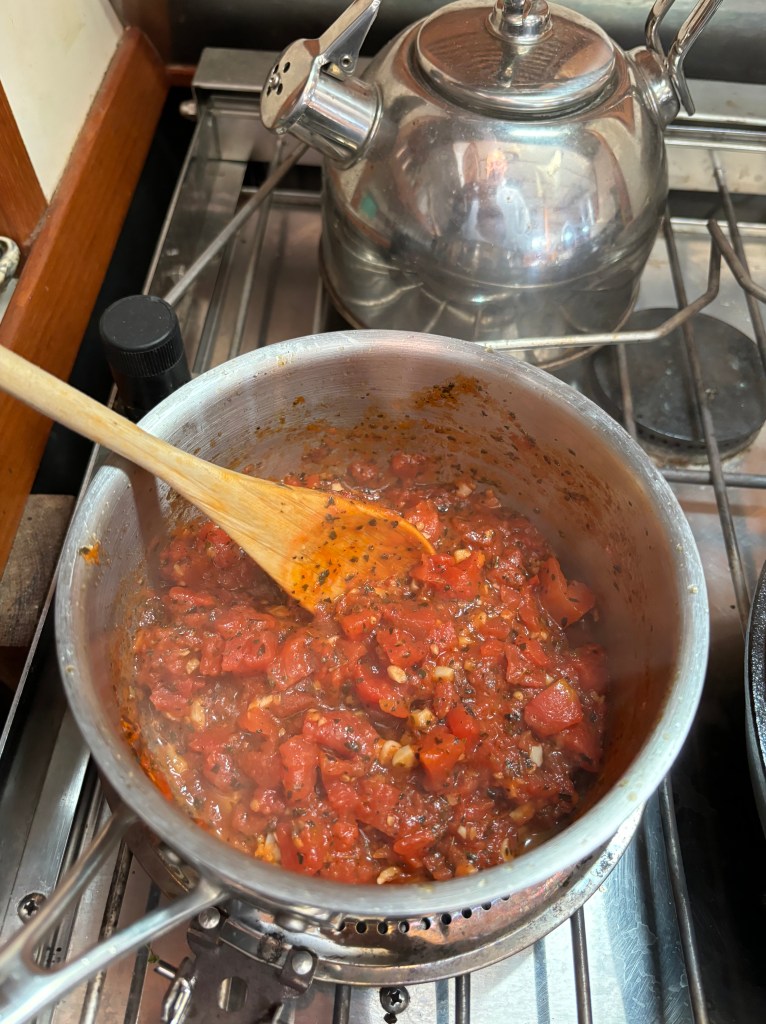
Simple marinara sauce. Could also use basil pesto. Or garlic, oil and anchovy paste.

Step 3: Preheat the oven. It should be as hot as you can get it. On Andante that is just over 400 deg F and it takes a solid 30 minutes to reach that temperature. In a dirt house you could easily reach 500 F. Whatever. You’ll be watching closely to see when your pizza is done and a hotter oven will just get you there faster.

Step 4: When the oven is almost hot, preheat your cast iron skillet on medium-high heat on the stovetop. For 5-6 minutes. Until really hot. Turn off the stove. Swizzle a generous amount of olive oil in the pan and maybe use a bit of paper towel to wipe the oil around and be sure it coats the whole thing.

HOT!! Note: This is before I added a couple of tablespoons of oil to the pan. There was an actual puddle of oil in the pan when I added the dough in the next step.

Step 5: Quickly, form your happy dough ball into an approximate pizza shape by pulling and stretching as needed and then plop it in the hot pan. Carefully, without searing your fingertips, press around the edges so the dough mostly fills the pan. It will probably be making attractive sizzling sounds at this point.

Don’t overthink this. A somewhat uneven disc of dough will taste exactly as good as a perfect circle. Just be careful not to burn your fingers on the pan.

Step 6: Toppings. With no delay, spread your sauce and whatever pizza toppings you prefer on the dough. I used mozzarella, feta, romano and parmesan cheeses. No animals died for my pizza. But several were thoroughly squeezed.

Step 7: Bake that thing. Carefully put the freaky hot pan in the oven and let it cook until the top is brown and bubbly. That should take between 10-15 minutes.

I keep a pizza stone in Andante’s oven. I’m not sure it helps but it looks cool.

It may not be Food & Wine attractive but the end result is perfectly acceptable after that bottle of wine. And the crust is nicely browned and crispy. Who needs anything else on a Friday night?
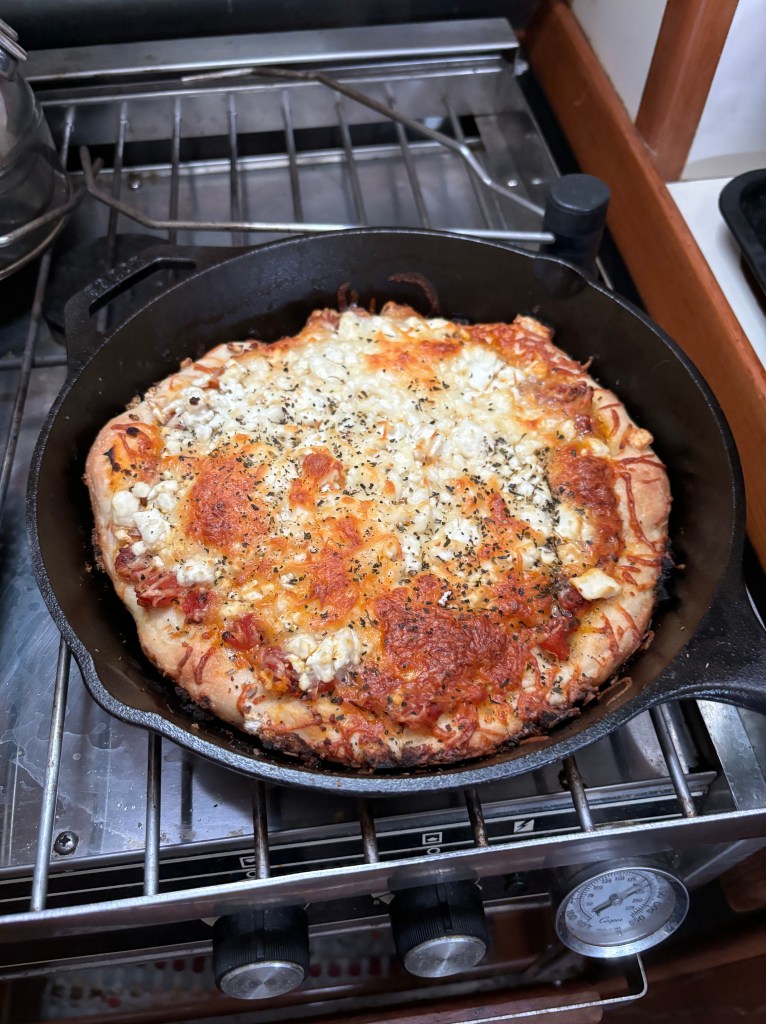
Except maybe another bottle of wine.

Enjoy your weekend.

Boat Food: Andante’s Walking Pace Rum Punch

Like everything aboard its a work in progress. But its joyful work.

Not too sweet, not too strong: Andante’s Walking Pace Rum Punch, version 2022.

There are endless varieties of rum punch throughout the Caribbean. I’m happy to have sampled quite a few from Ti Punch in Martinique and French Guiana, to the Caipirinha in Brazil, to Pusser’s Painkiller in the BVIs to local mixtures in Barbados, St. Lucia, Trinidad and elsewhere. I suppose rum punch is to the Atlantic what the Mai Tai is to the Pacific. But the best rum punches are anything but syrupy sweet like many of Mai Tais I’ve enjoyed.

Over the last several weeks I’ve worked on developing a rum punch that is not cloyingly sweet, not crazily alcoholic (some recipes add vodka for no reason other than to boost the alcohol content. Eew.) and complex enough that you want to enjoy it slowly and not down it like Gatorade. I think I’ve reached a happy place with a nice balance of sweet, bitter, and spicy notes and just enough kick to take the edge off after a stressful day of relaxing.

Tastes vary. I take zero responsibility for yours. But I suggest the following as a starting point for your own exploration. Here then follows the basic recipe for Andante’s Walking Pace Rum Punch.

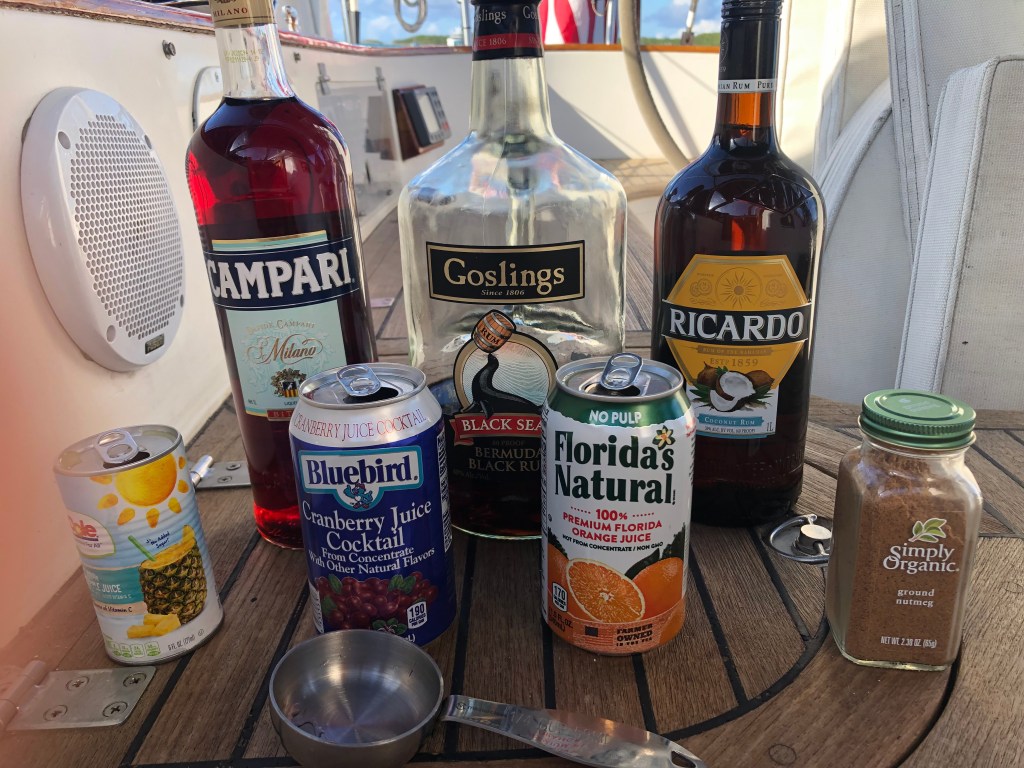
Dark Rum1/4 cup
Coconut Rum1/8 cup
Campari1/8 cup
Pineapple Juice1/4 cup
Orange Juice1/4 cup
Cranberry Juice1/4 cup

Shake all ingredients with some ice. Pour into ice-filled glasses and garnish with a sprinkle of nutmeg (optional, but definitely recommended) This makes approximately 2 drinks depending on the size of your glass and the amount of ice involved. The recipe is easy to scale up should you have friends aboard. I don’t, so this serves one.

Note the measurements provided are in cups rather than ounces as is traditional for cocktail recipes. I don’t have a cocktail jigger aboard so I’ve been using a 1/4 cup (2 oz) measuring cup for my experiments. You’ll have to eyeball the 1/8 cup measurements – or just double the recipe and plan to sleep in tomorrow.

Things you’ll need. Specific brands don’t matter much so use what you have. I prefer Goslings but other dark or golden rums should be fine. If you don’t have Campari then Aperol might be a substitute. But really? The coconut rum and canned juices are what was available locally in the Bahamas — fresh squeezed juices would probably be wonderful. And if you have a fresh nutmeg to grate over the top that would definitely beat the flavor of stuff in a jar.

Enjoy responsibly. And preferably while afloat somewhere warm…

Exploring

Nowhere to go. So I went places and did stuff.

The cold north wind keeps on blowing so no passage to the Bahamas anytime soon. So today I ferried some water and fuel, spent some time exploring the Fort Pierce Inlet / Indian River Lagoon area in Dinghy, cooked up some more of those yummy shrimp, and climbed the mast to fix a loose tether on the radar reflector.

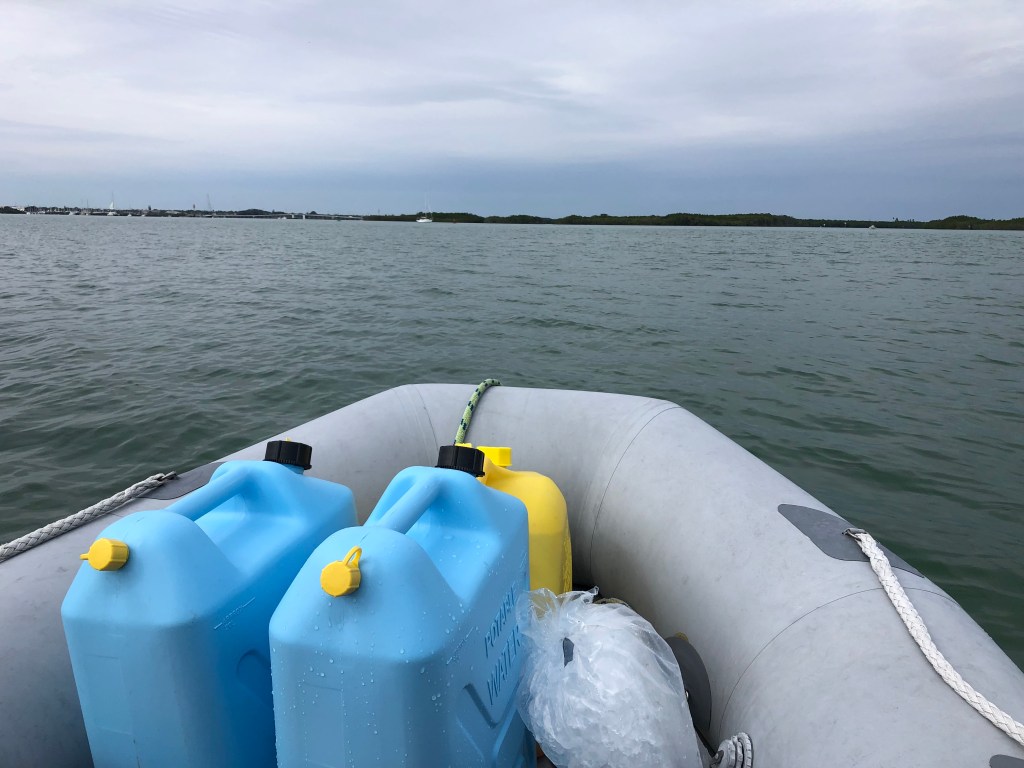
On the way back with fuel, water, and ice cubes. Even just sitting at anchor we use water (cooking, dishes, occasional showers) and fuel (battery charging and refrigeration). I have jugs to carry 10 gallons of water, 10 gallons of fuel, and 5 gallons of gasoline (for Dinghy). Filling all of the water and fuel tanks from zero this way would be hard work — keeping up with daily usage isn’t too bad.
Andante is anchored just south of a group of small mangrove islands. Lots of birds and fish and dolphins to see.
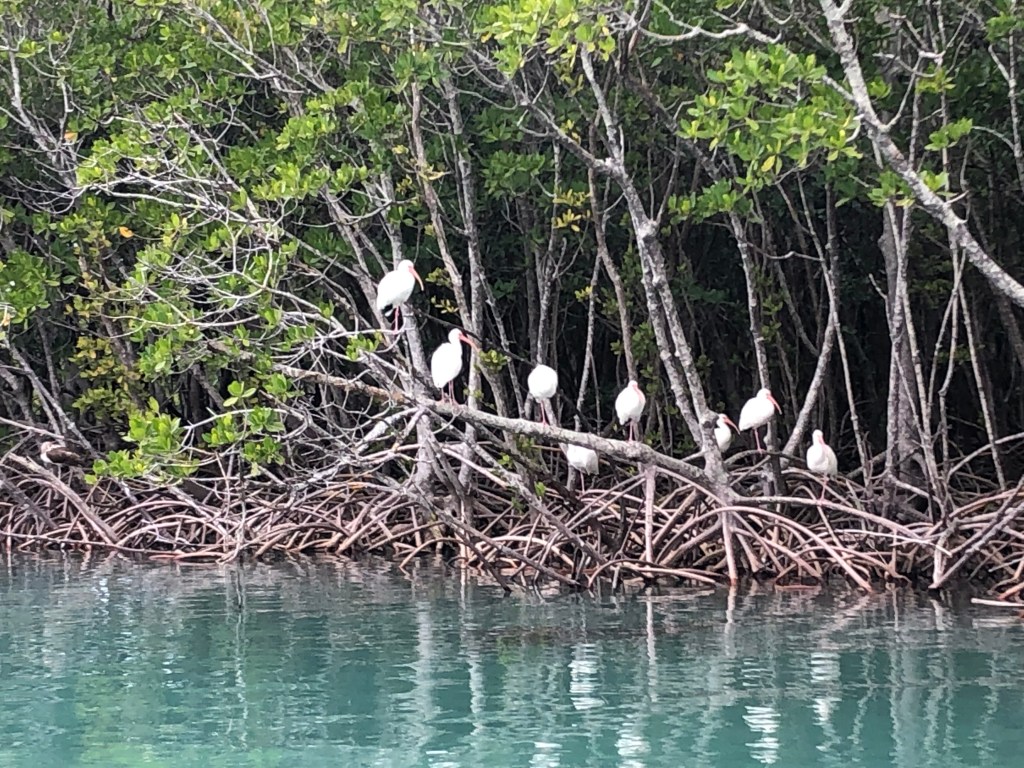
A gathering of white ibis. According to The Google such a grouping has many collective nouns including a “congregation”, “stand” and “wedge” of ibises.
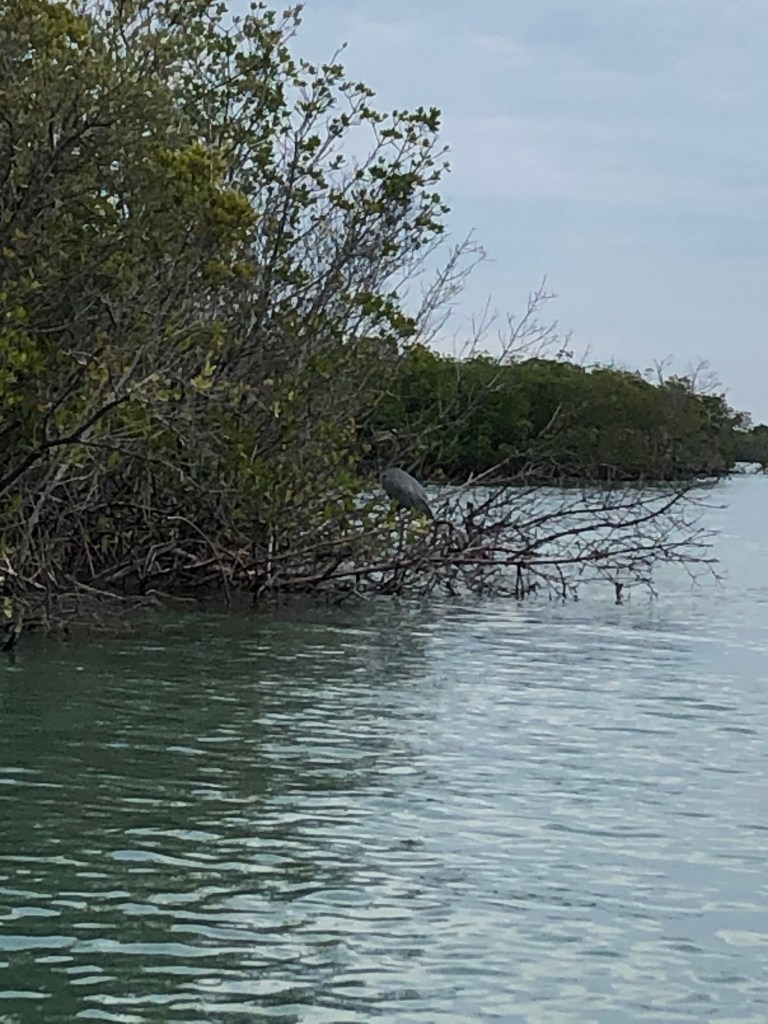
Great blue heron. She blends in well and held perfectly still as I drove past — but made a huge racket a few seconds later when startled by something.
A great egret. Not exactly their native habitat but she seems perfectly content. And probably a better boat driver than some folks who rent this little center console at the city marina. Yikes.
These guys seem to enjoy sneaking up on me and making the biggest possible blowing noise right next to the boat. Can be unnerving when its otherwise quiet. You can hear one of them make a little squeak in the last few seconds of the video. Sometimes I wish I had a hydrophone with me.
View from the lower spreaders. From this height you can hardly see the dirt. One of the lines securing the radar reflector had come loose so I went up to secure it. During the day I pull the boom off to one side during to minimize shading of the solar panel. The wind and current here are constantly changing so i have to adjust the boom frequently. On a good day we generate 40-50 Ah (around 500 Wh or 0.5 kWh) of energy. That’s about 20-25% of our daily usage when at anchor. I run the engine for an hour in the morning and evening to generate the remainder and to cool the freezer.
Finally, I used the last of the big brown shrimp from the farmer’s market to made a risotto. All the shrimp heads and shells were toasted in a pan with onions to make the stock. Yum.

Fort Pierce is Nice

Which is good. We could be here for a while.

Andante and I are still hanging out in Fort Pierce Inlet waiting for a weather window to head south and cross to the Bahamas. The latest forecasts suggest the next opportunity may be Sunday or Monday so I’m starting to get organized. Groceries, fuel, water, then Covid test, then go. Or not, depending on the actual weather that materializes. Good thing Fort Pierce is a nice (and relatively inexpensive) place to wait.

Like many of the boats around here waiting to cross I’m using the daily summaries and interpretations from Chris Parker for weather guidance in addition to my own analysis. I really like how his team understands that sailors are not looking for optimistic forecasts. I’d much rather plan around the worst likely scenario than hope for the best. Andante can handle some pretty nasty conditions without complaining. Not me.

Mmm fruits. The avocados are from Mexico and I’m not certain the limes are local. But the honeybells (a cross between a tangerine and a grapefruit) are definitely Indian River local and only available in January. They are really yummy.

Earlier this week I had a chance to visit the long-running and well-organized Fort Pierce Farmers Market. Lots of vendors selling foods and art and jewelry and whatnot. The actual local farm goods were less evident than I had hoped but I did pick up some fruits and some local shrimp. The honeybells, in particular, were fantastic. Almost ridiculously sweet and juicy and only available in January. Lucky me.

The farmers market is conveniently held in a park right next to the city marina where I can safely tie up Dinghy. It was a cool and slightly misty morning but not as cold as it looks.
There were booths selling just about everything. Including some pretty weird stuff with curious marketing choices. Note the “Not made from iguanas” disclaimer. Yay?
Downtown Fort Pierce is kind of cute. Lots of little shops and restaurants.
Alcohol and axe throwing. What could go wrong?

I also purchased some local shrimps from the farmers market. This booth had one of the longer lines at the market and there were folks in front of me ordering hundreds of dollars in shrimp. I settled for a pound each of two varieties. I did a quick taste test that afternoon and then a few nights later made a really yummy risotto with a stock based on toasted shrimp heads.

The large brown shrimp (top) and rock shrimp (bottom) were sold green and frozen in one-pound ziplocks from a big cooler. Once defrosted the soft-shelled browns cleaned up very easily. The rock shrimp were well armored and it was hard work getting the shells off.
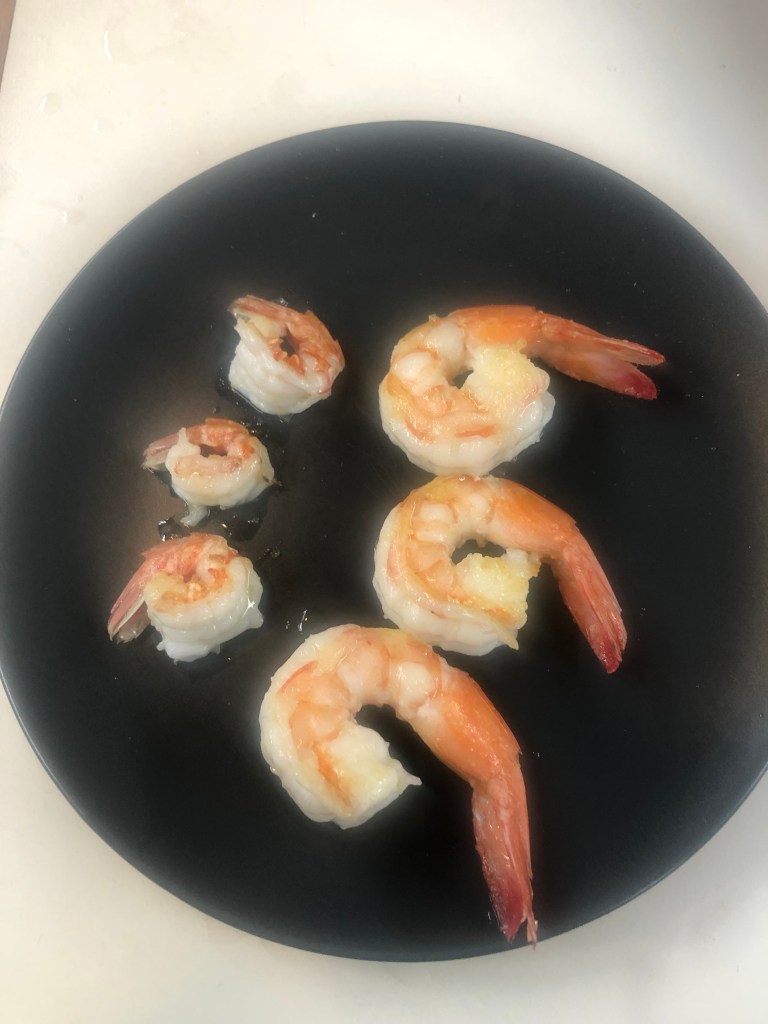
I sauteed a sampling of each very simply in olive oil and salt. Yum. The little rock shrimp were bright and lobstery while the big browns were the most shrimpy shrimp I’ve tasted. Very full and complex flavor. I enjoyed them both but would probably pass on the rock shrimp next time unless somebody else peeled them for me.

Since we’re on the subject of food I will mention that my bread baking, by necessity, is improving. I’m now making a loaf about every third day. I’ll share my recipe in a future post. Everyone is making no-knead bread. I’m trying to perfect no-mess bread since cleaning up splattered flour and sticky dough is a PIA (and water-waster) on the boat.

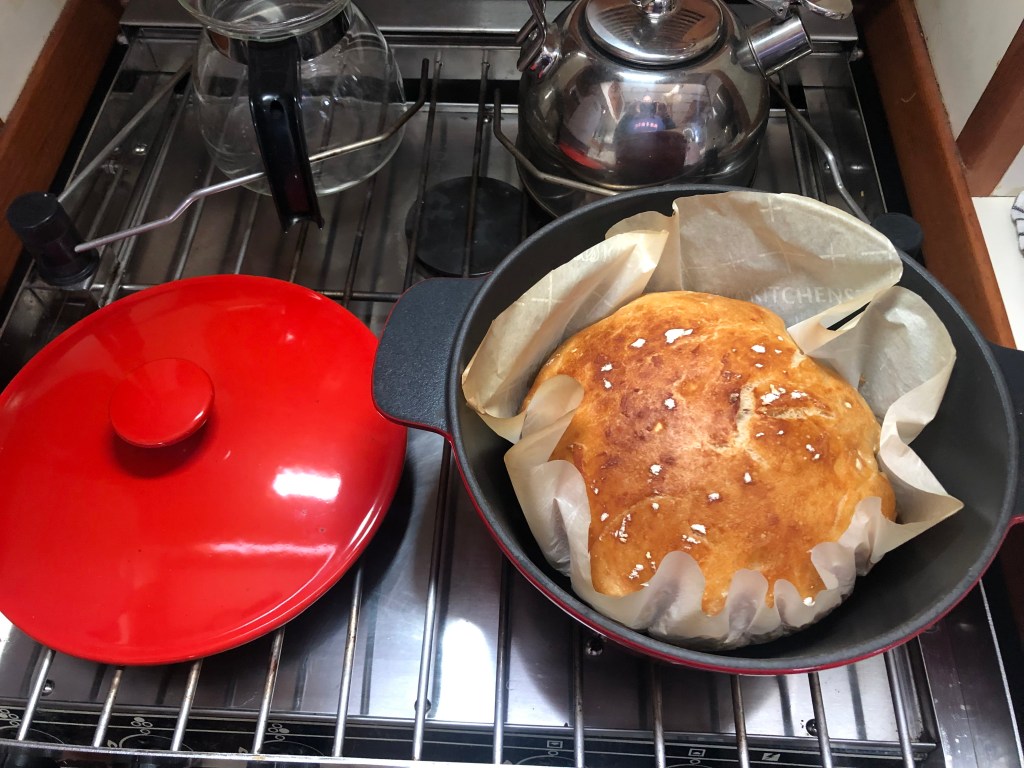
Mmm bread.
Breakfast: Boat toast (bread fried in butter until crispy) and avocados with lemon.

The waiting is tough since I’d much rather be sailing. But I’m using the time as best I can to catch up on engine maintenance (oil changes, etc.) and some ongoing deck and rigging projects. I’ve been shuttling fuel and water from a nearby marina so that all the tanks are in a near-constant state of fullness just in case there is an opportunity to leave. The required Covid test complicates matters somewhat but with a weather window of reasonable duration shouldn’t be a show-stopper.

Boat Food: Basic One-Pot Pasta

Several folks have asked me what I eat onboard. In fact I cook pretty much the same stuff that I’d eat ashore with a few modifications. To some these mods may seem like laziness but there are good reasons for taking certain shortcuts.

Onboard there are some critical supplies that are limited. Chief among these are water, fuel, and time. I tend to favor dishes that use very little water, preserve cooking gas, don’t require hours of preparation or fiddly pot-watching, and minimize clean-up (which saves both water and time). Also, because the galley is in the center of the living area its important to minimize the generation of heat and steam. Excess heat is an obvious concern in warm climates. Steam (for example, from boiling water) can be a real concern when its cold as it exacerbates condensation on the inside of the hull and in poorly-ventilated lockers.

I tend towards a vegetarian (or at least pescatarian) diet and eat a lot of pasta. At home this pasta would be cooked first in a big pot of salted water (until the dog tells me its ready) and then drained and topped with a sauce that was cooked separately.

On the boat that approach would violate almost all of the concerns raised above. Instead I cook pasta directly in a very loose sauce in one pot on one burner. Is the result perfectly al dente pasta? No. But it saves water, fuel, dirty dishes, generates less steam and tastes really good.

Here’s how I do it:

Gently saute half an onion, several cloves of garlic and a good pinch of red pepper in hot olive oil until the onion softens and starts to color.
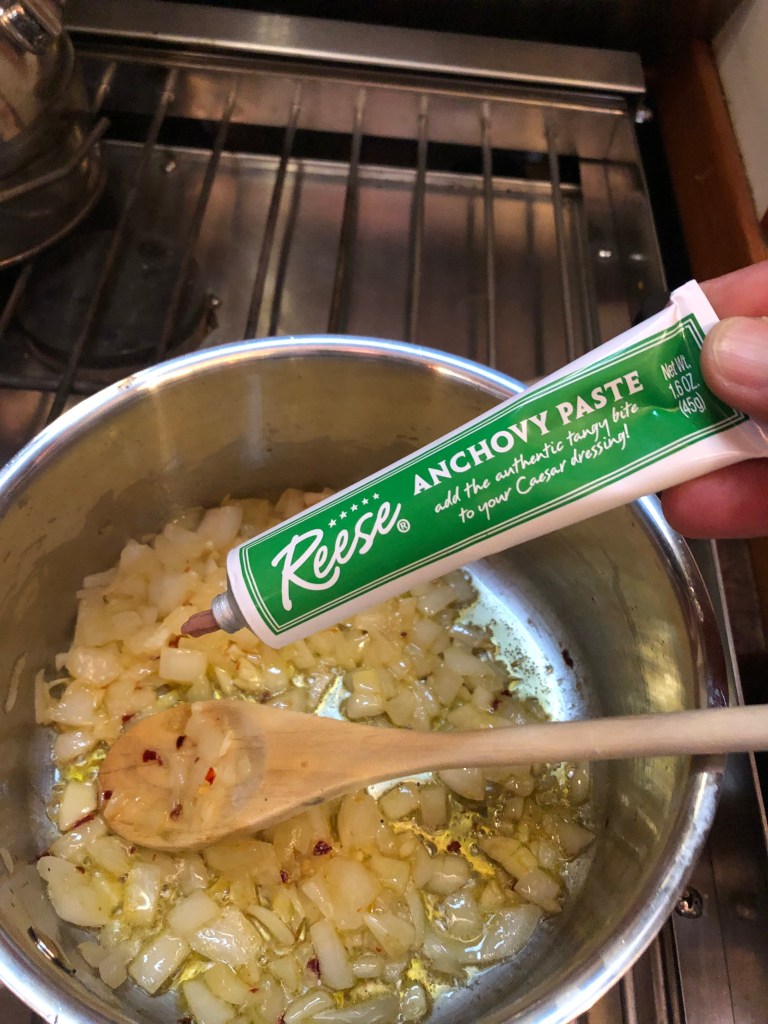
Optional, but recommended: Add a nice squirt of anchovy paste (or 3-4 fishes from a tin) and saute a few minutes longer. Adds a ton of flavor.
Add a 15oz can of crushed tomatoes then fill the empty can with water and add it to the pot. See what we did there? We diluted the crushed tomatoes 1:1 while also washing all the tomatoey goodness out of the can without having to measure anything. Add a good palm full of dried oregano and basil and 10-15 grinds of black pepper.
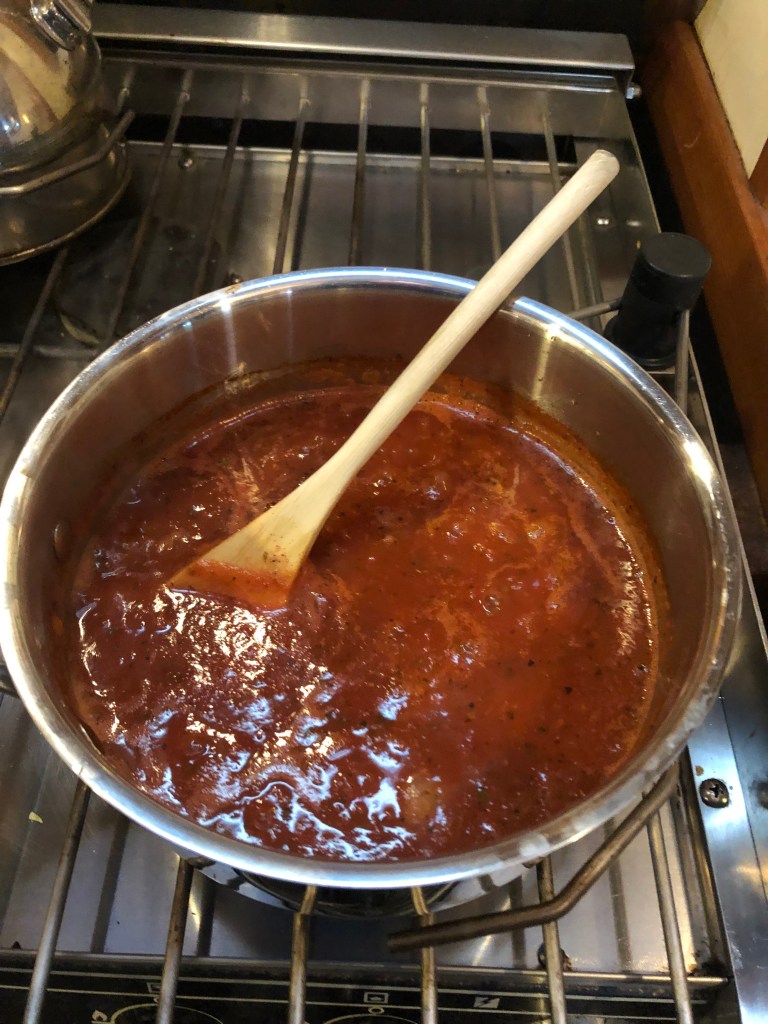
Bring the resulting mixture to a boil. It will be very loose and look more like tomato soup than tomato sauce. In fact, at this point it IS tomato soup. You could probably stop here and enjoy with a grilled cheese sandwich if that’s how you’re feeling.
Add about 2 cups of dry pasta to the boiling liquid. Stir it around and reduce the heat to a gently bubbling simmer.
My stove burns really hot so I use a flame tamer to allow a lower simmer. You want to keep the liquid bubbling but don’t want to scorch the bottom or cause it to boil over.
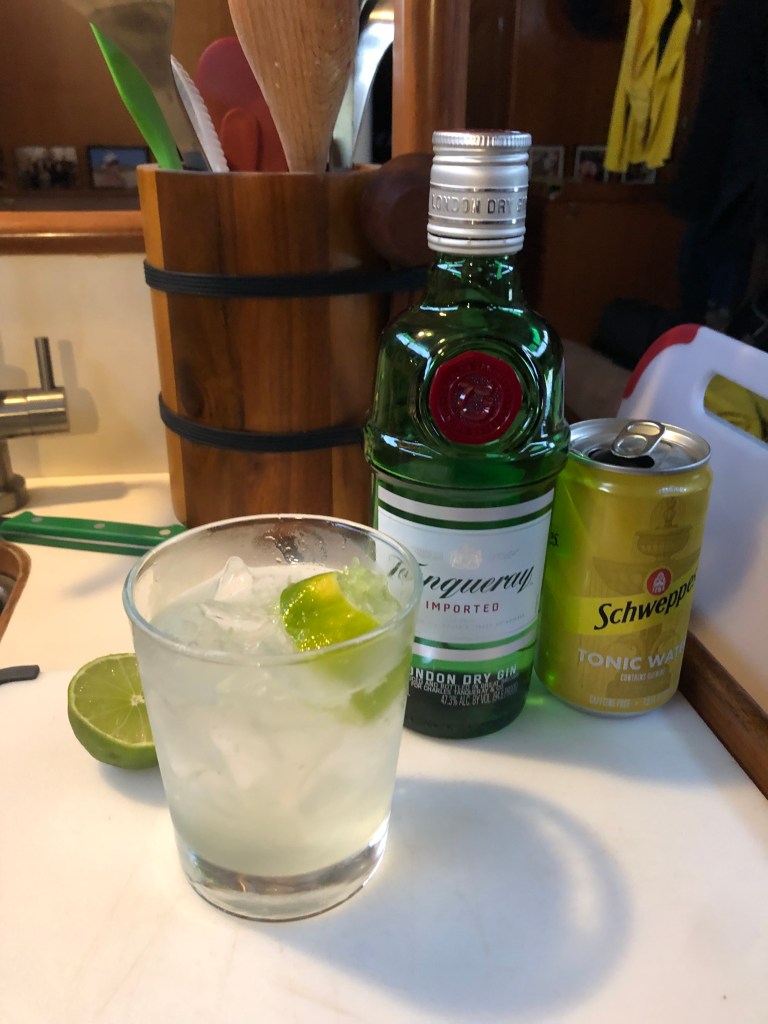
Make yourself a gin & tonic.
Cook, stirring occasionally, until the pasta is done to your liking and the sauce has thickened up. For me this takes somewhere between 1.5-2 gin & tonics. I suppose this could vary depending on the size of your glass and how vigorously your pot is simmering. Figure 12-15 minutes.
Add some grated parmesan and enjoy.

And that’s that. One pot, one bowl, one spoon and one fork to clean. No water wasted. Texture is as good as can be expected but wasn’t perfect to begin with so reheated leftovers taste just as good tomorrow. And the boat smells fantastic for hours afterwards.

Basic formula: 2 cups (15 oz +/-) of crushed tomatoes + 2 cups of water + 2 cups of pasta feeds 2 normal people.